Guide
Home water filters and changing the cartridge
Learn what a home water filter removes and how its label shows it, why most pitcher and fridge filters don't remove germs, and how to change a cartridge safely.
Satisfy+ Editorial · Published June 22, 2026 · 3 min read
At a glance
- Pitcher and fridge filters
- Mostly taste and smell, not germs
- What it removes
- Printed on the label and its certification
- Germs
- Need a small enough absolute pore size
- Changing cartridges
- On the maker's schedule, wearing gloves
Water filters can improve the taste of water, its safety, or both. Some make it taste better, others remove harmful chemicals, and others remove certain germs. What a filter removes depends on the size of its pores, the size of the substance and the substance's electric charge. Filters also take out beneficial chemicals, such as the chlorine that kills germs in tap water and the fluoride that prevents cavities.
What common filters do
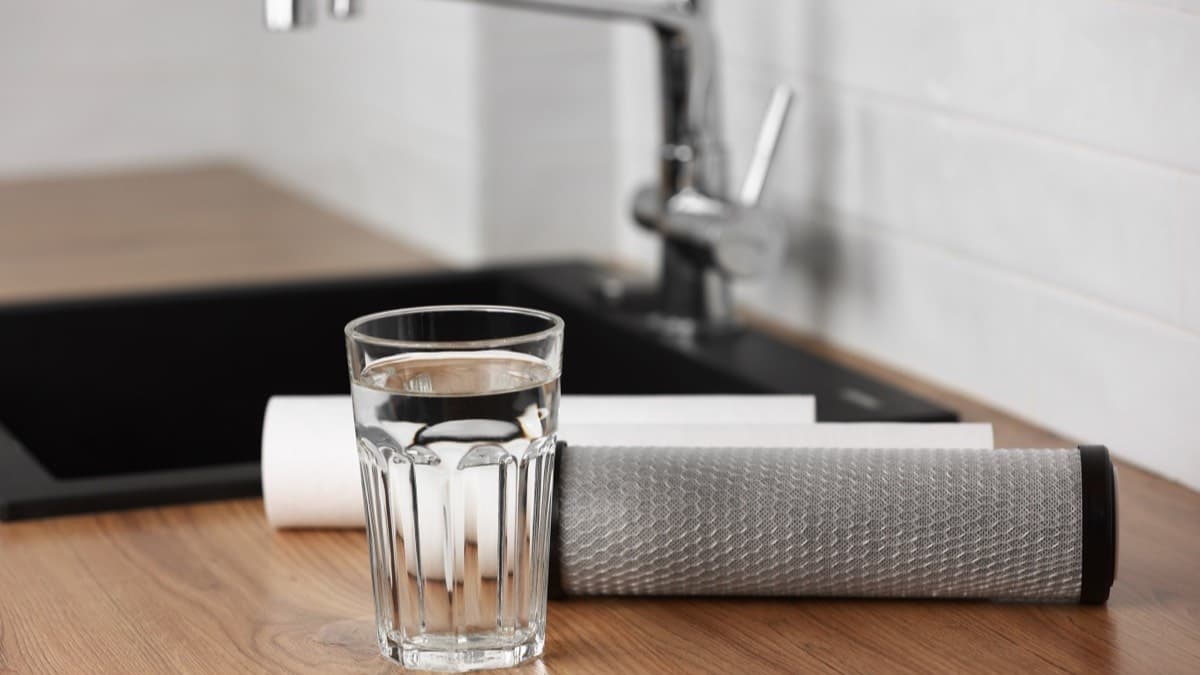
- Pitcher and fridge filters usually use activated carbon. Their main job is better taste and smell, and some remove heavy metals like lead. Most aren't designed to remove germs.
- Microfiltration, ultrafiltration and nanofiltration remove different germs depending on the pore size.
- Reverse osmosis removes germs and some chemicals, including lead, copper, chromium, chloride and sodium.
- Filters that remove germs often don't remove chemicals, and the reverse.
Reading the label
The filter's label lists what it can remove. An NSF certification on the label shows the standard it was tested to, and the NSF database lists what each certified product removes.
| NSF standard | What it covers |
|---|---|
| 42 | Taste and odor |
| 53 | Cyst reduction, including the parasites Giardia and Cryptosporidium |
| 58 | Reverse osmosis |
| 62 | Distillation |
Pore size matters for germs. A filter with an absolute pore size of 1 micron catches anything larger than 1 micron. One with a mean, or nominal, pore size of 1 micron has some larger holes and can let some of those through. Removing parasites takes an absolute pore size of 1 micron or smaller, and bacteria 0.3 micron or smaller. Only nanofiltration and reverse osmosis remove viruses.
Taste isn't a test
Harmful germs and chemicals often don't change how water looks, tastes or smells. Some harmless substances, like some that contain sulfur, make it taste or smell bad. A water test shows what's actually in it. Water from a public system comes with a water quality report every year. Private well water should be tested at least once a year for germs and chemicals.
Changing the cartridge
A filter needs upkeep to keep working and to stop germs from growing inside it. That means changing the cartridge on the schedule in the manufacturer's instructions. Wear gloves while you change it, and wash your hands afterward. Anyone with a weakened immune system should avoid changing filters, which could expose them to the germs and chemicals the filter caught. A whole-home filter that removes chlorine can let more germs grow in the plumbing.
An annotated example
What to do next
Read the filter's label for what it's certified to remove, and note the cartridge change schedule from its manual. On a private well, test the water at least once a year. For lead in particular, see Lead in drinking water, flushing the tap and testing. For well upkeep, see Private wells, the yearly test and the upkeep around them.
Keep the water filter working
- Note the cartridge change schedule from the filter's manual
- Read the filter label for what it's certified to remove
- Test the well water for germs and chemicals
FAQ
Do pitcher and refrigerator filters remove germs?
Most don't. They usually use activated carbon to improve taste and smell, and some remove heavy metals like lead.
How do I know what my water filter removes?
Check the label and its NSF certification, then look up the product in the NSF database.
How often should I change my water filter cartridge?
On the schedule in the manufacturer's instructions. A filter that isn't maintained stops working properly and can grow germs.
Sources
Checked October 20, 2026
- Centers for Disease Control and Prevention. About choosing home water filters (2024)
- Owner
- Plumbing
- Tenant