Explainer
Sinkholes and the ground under the house
Learn where sinkholes form and why, the signs of ground sinking under a house, and the human causes to rule out before calling a geologist or geotechnical engineer.
Satisfy+ Editorial · Published July 31, 2026 · 3 min read

At a glance
- Where
- Over limestone, dolomite, salt, gypsum and other rock groundwater dissolves
- Most damage
- Florida, Texas, Alabama, Missouri, Kentucky, Tennessee and Pennsylvania
- Signs
- Tilted floors, misaligned door frames, cracks and small holes at the foundation
- First check
- A leaking pipe or an old buried pit
A sinkhole forms where the ground can no longer hold up the surface above it. Most form over rock that groundwater dissolves, such as limestone, dolomite, salt and gypsum. As the rock dissolves, spaces and caverns open underground. The land above often stays intact until a space grows too big, then the surface can drop. Sinkholes rarely happen, but when one opens under a house or a road the damage can be severe. The most damage tends to occur in Florida, Texas, Alabama, Missouri, Kentucky, Tennessee and Pennsylvania.
How they form
A sinkhole is ground with no natural surface drainage. Rain that falls on it stays inside and drains down into the ground. Sinkholes range from a few feet across to hundreds of acres, and from less than 1 foot to more than 100 feet deep. Most form so slowly that little change is noticeable. Others form suddenly when the ground collapses.
- Dissolution sinkholes form where rain and surface water seep through cracks in exposed limestone and slowly carry the rock away, leaving a shallow bowl.
- Cover-subsidence sinkholes develop gradually where sandy soil covers the rock and trickles down into the openings below.
- Cover-collapse sinkholes can open within hours where the soil over the rock holds a lot of clay. These do the most sudden damage.
What people do to trigger them
New sinkholes have been tied to how land is used. Groundwater helps hold up the soil over buried cavities, so pumping that lowers the water table can bring on a collapse. In January 2010, more than 110 sinkholes formed around Dover, Florida, after farmers pumped groundwater to protect crops from a freeze. Changing natural drainage, building new drainage systems and adding the weight of new ponds or fill can set one off too.
The signs around a house
Watch the house and the yard for signs of the ground sinking:
- Floors that start to tilt
- Door frames that pull out of square
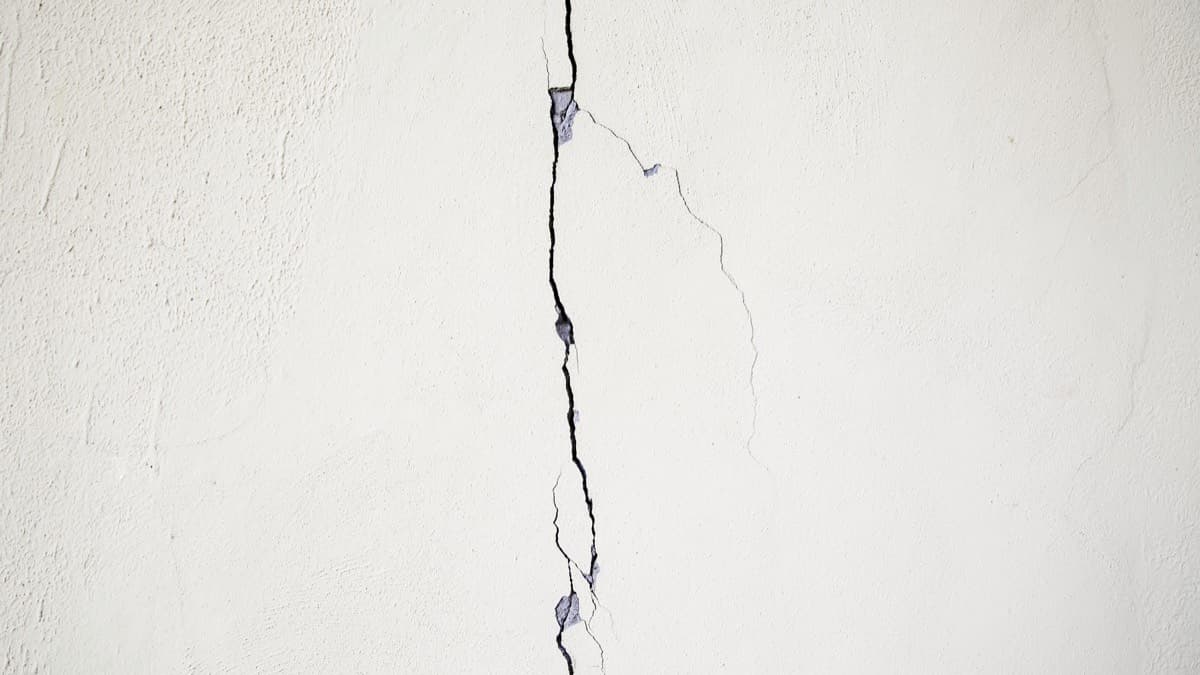
- Cracks and small holes in and around the foundation
- Surface water that runs into a low spot or straight into a hole in the ground
None of these proves a sinkhole. Rule out the human causes first. A leaking underground pipe can wash soil away, and an old construction pit or buried debris can settle years later.
An annotated example
What to do next
Look up whether your area sits on rock prone to sinkholes. The USGS publishes maps of these areas, and county offices often have local information. Keep watching the foundation and the yard for tilting, cracks, small holes and sinking ground. If you find signs, rule out a leaking pipe or an old buried pit first. If the cause looks natural, call the gas, electric, water or sewer utility about any line that may be damaged. A professional geologist or geotechnical engineer can work out what's happening and how to stabilize it. Foundation cracks and which ones matter covers reading a crack.
Watch the ground around the house
- Walk the foundation and yard for cracks and sinking ground
- Look up whether the area sits on rock prone to sinkholes
FAQ
What causes a sinkhole?
Groundwater dissolving rock such as limestone or salt and leaving spaces underground, until the ground above can no longer hold up the surface.
What are the signs of a sinkhole near a house?
Tilting floors, door frames out of square, cracks and small holes around the foundation, and water draining into a new low spot or hole.
Who checks a possible sinkhole?
First rule out a leaking underground pipe or an old buried pit settling. For a natural sinkhole, a professional geologist or geotechnical engineer can investigate.
Sources
Checked October 20, 2026
- U.S. Geological Survey, Water Science School. Sinkholes (2026)
- U.S. Geological Survey. I have (or think I have) a sinkhole on my property. What should I do? (2026)
- U.S. Geological Survey. National Preparedness Month 2020: landslides and sinkholes (2020)
- Yard
- Foundation
- Owner