Explainer
Weep holes and flashing at the bottom of a brick wall
Learn why a brick wall has an air space, metal flashing and small open joints at its base, why they have to stay open, and what goes wrong when someone fills them in.
Satisfy+ Editorial · Published May 19, 2026 · 3 min read
At a glance
- Behind the brick
- A 1-inch air space
- At the base
- Metal flashing and open weep holes
- Also found
- Above and below windows
- Never
- Foam or fill them
Brick and stone are porous. They soak up rain, and some of that water seeps through to the back of the brick. A brick wall on a house is built with that in mind. The brick stands about 1 inch out from the wall behind it, leaving an air space where the water that gets through can run down. At the bottom of the wall, a strip of metal flashing catches it and carries it out through weep holes, small openings in the lowest row of brick. The same flashing and weep holes sit above and below the windows.
What they look like
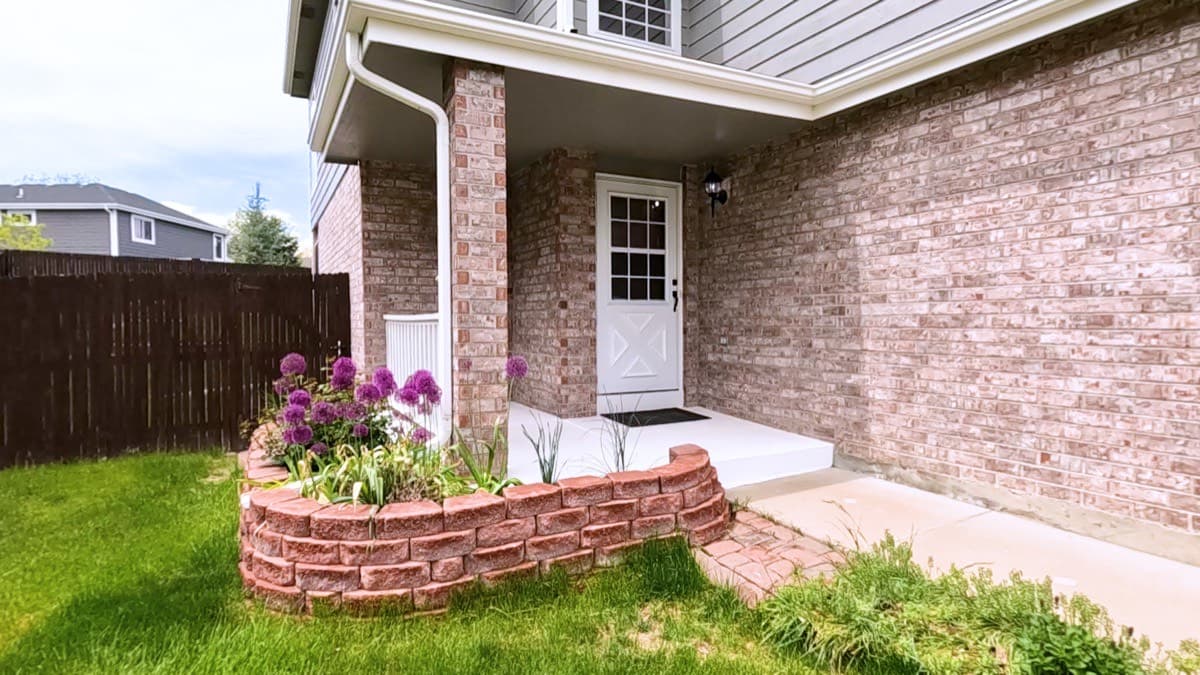
Weep holes are small openings between the bricks in the lowest row, and again just above and below the windows. On a well-built wall, a fine mesh screen covers each one.
Why they have to stay open
Water that collects on the flashing has to be able to drain out through the weep holes. If it can't, it sits behind the brick, and the wall stays wet. Brick and stucco walls without working flashing tend to cause the worst water damage, from staining and leaks to freeze-thaw cracking.
What blocks them
- Filling them in. Spray foam pushed into weep holes stops the wall from draining.
- Mortar droppings. Mortar that fell into the air space while the wall was built can pile up at the bottom and clog the weep holes.
- Pests. Bees and mice can get in through unscreened weep holes and nest in the space behind the brick. A fine mesh screen keeps them out without stopping the water.
The ground around the house should slope away from the walls on every side, so the water that drains out keeps moving away from the foundation.
An annotated example
What to do next
Walk around the house and find the weep holes along the bottom of any brick or stone wall, and look for the ones above windows and doors from the ground. Don't fill them, and take out anything a past owner pushed into them. If they look clogged with mortar, or a wall stays damp or stained below them, have a mason look at it. Mortar joints and repointing brick covers the joints between the bricks.
Keep the brick wall draining
- Find the weep holes at the base of the brick walls
- Remove any foam pushed into a weep hole
- Ask a mason to look at weep holes clogged with mortar
FAQ
What are the small holes at the bottom of my brick wall?
Weep holes. They let water that gets behind the brick drain out onto the metal flashing at the base of the wall and away.
Should I seal the weep holes in my brick?
No. Filling them with foam stops the wall from draining. A fine mesh screen keeps insects out without blocking the water.
Why is there a gap behind brick veneer?
Brick soaks up water, and some of it passes through. A 1-inch air space lets that water run down to the flashing and out the weep holes.
Sources
Checked October 20, 2026
- Pacific Northwest National Laboratory, Building America Solution Center. Flashing at bottom of exterior walls (2017)
- Pacific Northwest National Laboratory, Building America Solution Center. Moisture-, impact-, fire- and pest-resistant exterior siding (2021)
- Exterior
- Owner