Explainer
Whole-house fans and when to run one
Run a whole-house fan only when it's cooler outside than in, open enough windows first, close the fireplace damper, and seal the ceiling opening for winter.
Satisfy+ Editorial · Published June 5, 2026 · 4 min read

At a glance
- Run it
- Only when it's cooler outside than inside
- First
- Open windows and close the fireplace doors and damper
- Not with
- The air conditioner, especially in a humid climate
- Winter
- Close or cover the ceiling opening
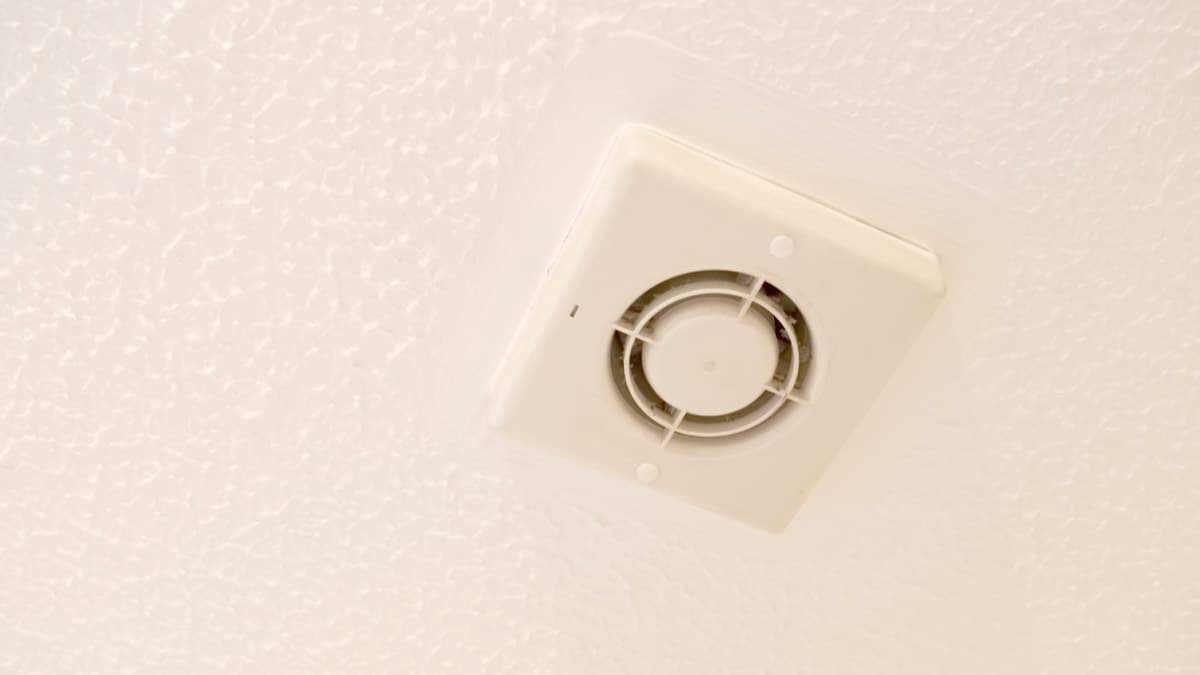
A whole-house fan sits in the ceiling, usually at or near the center of the house, such as at the top of the stairs. When the outside air is cooler than the inside air, it pulls air in through open windows and pushes the warm air out into the vented attic, or through a duct straight outdoors. It cools the house by sending warm air out, by cooling down the house's walls, floors and furniture overnight, and by moving air across your skin.
Whole-house fans work in every climate. They work best where summer nights drop below about 67°F and the daily high and the overnight low are more than about 25°F apart.
When to run it
Turn the fan on when it's cooler outside than inside, and off when it isn't. Never run it when the outside air is warmer than the inside air, since that can cause moisture problems in the house.
Don't run it at the same time as the air conditioner. In a humid climate, switching back and forth makes the air conditioner work harder, because it has to dry out the humid air the fan brought in. Warm, humid outside air can also condense on surfaces the air conditioning has cooled, and that lets mold grow. Where summers are humid:
- Use the fan in spring and fall, with the air conditioning off.
- Once summer calls for steady air conditioning, keep the fan off until the weather cools again.
- In between, nights are cool but you run the air conditioning by day. Then the fan is generally fine at night if it will be at least 10°F cooler outside than inside during the day.
- Keep the air conditioning off for several hours before and after running the fan.
On humid nights you may find the outside air uncomfortable even when it's cooler. Whether to run the fan then is your call.
Before you turn it on
- Open the windows. Open at least 4 square feet of screened window for every 1,000 cubic feet per minute of the fan's airflow. Count only the open part of the window. A sliding window opens only a third to a half of its total area.
- Close the fireplace. Close the fireplace doors and damper.
- Think about gas appliances. A whole-house fan moves 1,000 to 10,000 cubic feet of air a minute. With too few windows open, it can pull the house's air pressure down. That can draw exhaust back from a gas or propane appliance that takes its air from the room or has a standing pilot light. It can also pull air in from the garage or crawl space. If you have that kind of appliance, have an HVAC contractor look at the setup.
Winter and air conditioning season
When the fan isn't in use, its ceiling opening can leak heated or cooled air. Newer fans have insulated dampers that close on their own. Older fans often have only thin louvers that open with the airflow, and they need an insulated cover. The best covers go on and come off from inside the house, so no one has to go into the attic. If yours is on the attic side, have someone else take it off and put it back each season.
Other things to know
A whole-house fan can bring in pollen, dust, humid air, smoke and pollution along with the cool air. Open windows can also be a security concern.
An annotated example
What to do next
Only run the fan when it's cooler outside than in, and never with the air conditioner on. Open enough windows and close the fireplace before you switch it on. If the house has a gas appliance that draws room air or has a standing pilot, have an HVAC contractor check how it and the fan work together. Seal the fan's opening for winter. Ceiling fan direction by season covers the room fans.
Run the whole-house fan the right way
- Open enough windows before turning on the whole-house fan
- Close the fireplace doors and damper before running the fan
- Put the insulated cover on the whole-house fan for winter
FAQ
When should I run a whole-house fan?
When it's cooler outside than inside, with windows open. Never when it's warmer outside, and not while the air conditioner is on.
How many windows should be open for a whole-house fan?
At least 4 square feet of open, screened window for every 1,000 cubic feet per minute of the fan's airflow.
Can I use a whole-house fan in a humid climate?
Yes, in spring and fall with the air conditioning off, and on summer nights at least 10°F cooler than the inside air was by day.
Sources
Checked October 20, 2026
- U.S. Department of Energy, Building America Solution Center. Whole-house fans (2026)
- HVAC
- Owner
- Heat
- DIY