Explainer
Daylighting and skylights explained
Daylighting brings sunlight in through windows and skylights to cut the need for lamps by day, and which way the glass faces changes how easily you control glare and heat.
Satisfy+ Editorial · Published June 15, 2026 · 3 min read
At a glance
- North and south
- Glare and heat are easy to control
- East and west
- Glare and heat are harder to control
- Light tubes
- 10 to 14 inches across, with no light well to build
Daylighting is the use of windows and skylights to bring sunlight into a house. Efficient windows, well placed, cut the need for lamps during the day without causing heating or cooling problems. Their design can also lower heating and cooling costs, by letting the sun's heat in or keeping it out.
Which way the windows face
Windows on the north and south sides let in natural light, and glare and heat on those sides are easy to control. East- and west-facing windows are trickier. Overhangs, fixed shades, louvers and screens help control the glare and the heat, and low-e coatings and films can cut the heat the sun brings in.
Skylights
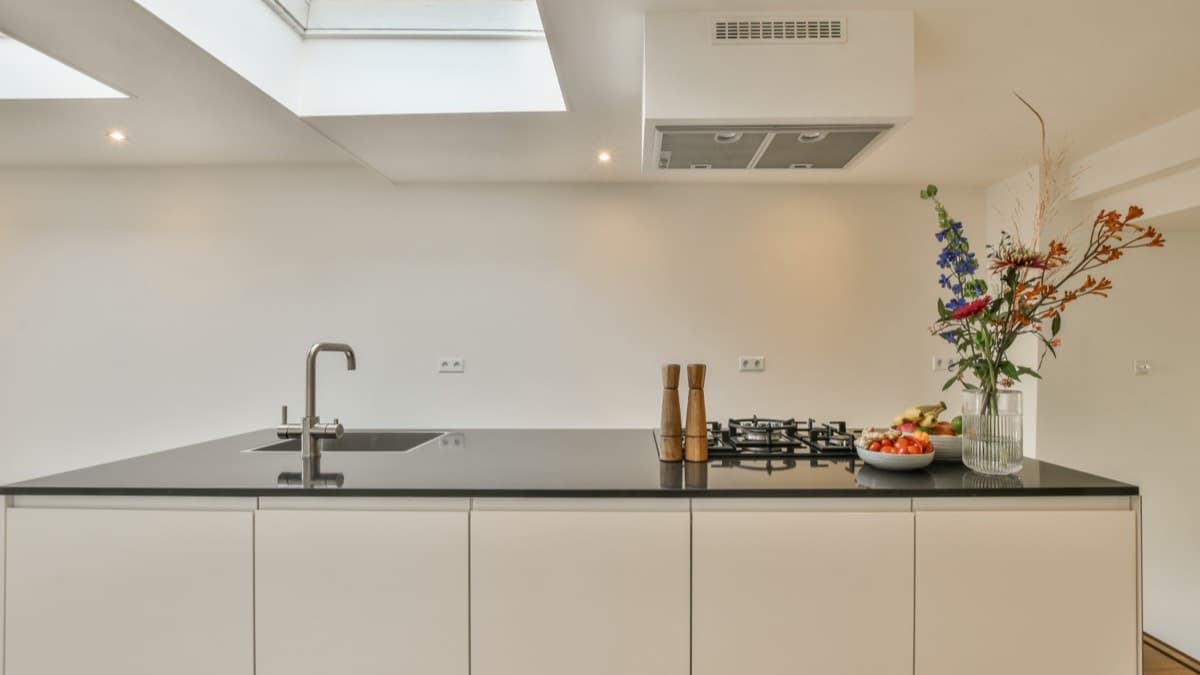
A skylight brings daylight into a room from above, even an inside room with no windows. Skylights are glazed with glass and come with most of the glazing and sun-control options of ordinary windows. Most can take a shade inside to soften or block strong sun, and many have a sash that rotates so you can clean the outside pane.
Operable skylights open by hand or with a motor, and some vent air without opening at all. Opening one lets out the hot air that rises to the ceiling.
The kinds of skylight
- Flush mount. Set on the roof deck with no curb, and overlapped by and sealed to the roofing.
- Curb mount. Set on a curb raised above the roof, which is built separately.
- Integral curb. Supplied with its own curb as one unit.
- Light tubes. A clear plastic dome on the roof connects to a small diffuser in the ceiling through a highly reflective tube. The tube is about 10 to 14 inches across and bends, so it fits in tight places without reframing the roof or building a light well.
Glazing choices include high-performance, tempered, laminated and impact-resistant glass, and glass rated for snow loads. Pick skylights for your climate. ENERGY STAR skylights carry National Fenestration Rating Council ratings that meet the limits for your climate zone.
Condensation
Water dripping from a skylight is often condensation rather than a leak. A skylight is usually the first place it forms, and it means the air inside holds too much moisture. Insulating the skylight's shaft, keeping air moving, and glazing that insulates well in a well-designed frame all help.
Leaks
Skylights are among the most common places water gets into a house. From inside, look for peeling paint and water stains around each one. Outside, the roofing around it should be sound. A roofer can run a garden hose over the skylight and the roof around it to find an active leak.
An annotated example
What to do next
Look at the ceiling around each skylight for water stains, and add a shade to any skylight that lets in too much sun.
Look over the skylights
- Look at the ceiling around each skylight for water stains
- Add a shade to a skylight that lets in too much sun
FAQ
Is water on a skylight always a leak?
No. It's often condensation, which means the air inside holds too much moisture. Stains and peeling paint around the skylight point to a leak.
Do light tubes need a light well?
No. The tube is about 10 to 14 inches across and bends, so it fits without reframing the roof.
Sources
Checked October 20, 2026
- U.S. Department of Energy. Energy 101: daylighting (2013)
- U.S. Department of Energy, Building Science Education. Natural light and daylighting (2026)
- U.S. Department of Energy, Building Science Education. Inspecting skylights for water damage and infiltration (2026)
- National Fenestration Rating Council. Skylights (2026)
- U.S. Environmental Protection Agency, ENERGY STAR. Residential windows, doors and skylights: what makes it ENERGY STAR? (2026)
- Owner
- Windows and doors
- Roof