Explainer
Heat pump water heaters explained
A heat pump water heater moves heat from the room air into the tank, using about a quarter of the energy of a standard electric model, and it needs a room that stays between 40 and 90 degrees.
Satisfy+ Editorial · Published August 31, 2026 · 3 min read
At a glance
- How it heats
- Moves heat from the room air into the water
- Energy use
- About one-quarter of a standard model's
- Household of 4
- About $550 a year in savings
- Room
- 40 to 90 degrees year-round
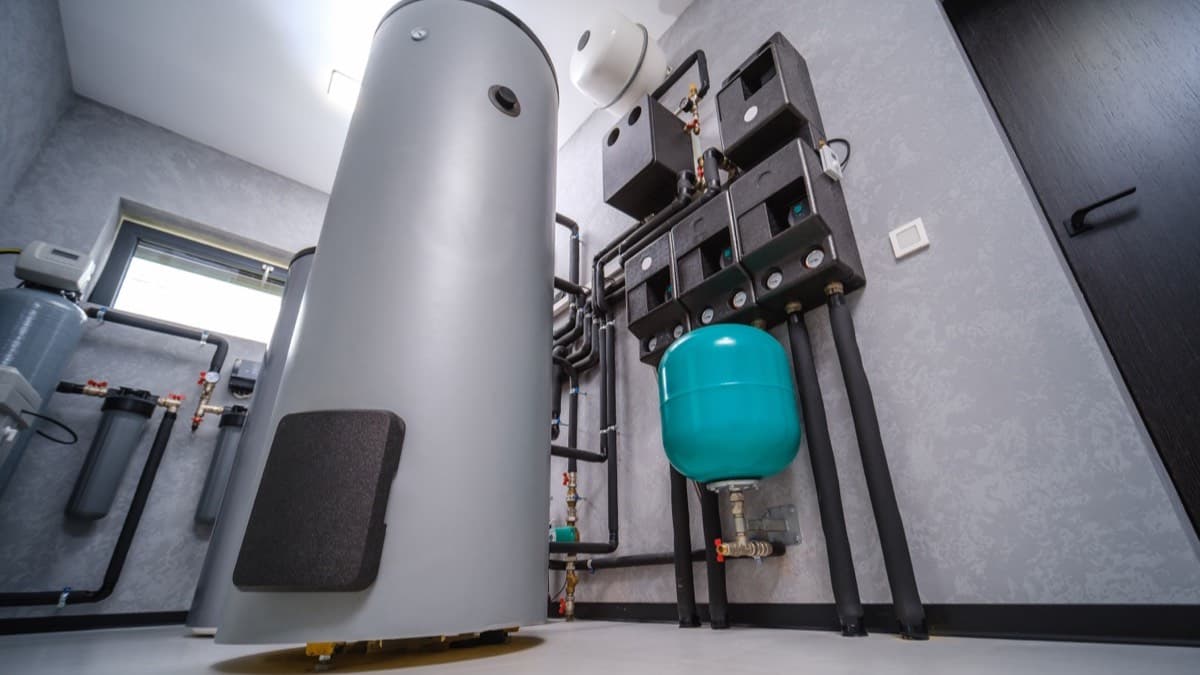
A standard electric water heater heats water with an electric element. A heat pump water heater works like a refrigerator in reverse. It takes heat from the surrounding air and moves it into the water in the tank. They're also sold as hybrid electric water heaters. Water heating takes about 12 percent of a home's energy, more than the refrigerator, washer, dishwasher and dryer combined.
What it saves
A certified heat pump water heater uses about one-quarter of the energy of a standard model, and is 2 to 3 times more efficient than a conventional electric water heater. It costs more up front, and the savings pay back the difference in about three years for a household of 4.
| Household | Yearly savings | Payback |
|---|---|---|
| 2 people | About $270 | 5.5 years |
| 3 people | About $410 | 3.7 years |
| 4 people | About $550 | 2.7 years |
These figures assume electricity at 14.6 cents a kilowatt-hour, a $1,503 price difference over a standard model and a 13-year life. Your own rate and hot water use will change them.
Where it can go
In most homes it fits where the current water heater sits. It needs a space that stays between 40 and 90 degrees year-round. Most models need about 700 cubic feet of air around them, about a 10 by 10 foot room with a 7-foot ceiling. In a tight closet, a full louvered door gives it enough air.
It runs less efficiently in a colder space, and it cools the room it's in. A room with spare heat, such as a furnace room, suits it, and in hot, humid months it also cools and dries the air. It drips a small amount of clean water, piped to a nearby drain or a condensate pump. Tanks usually come in 50, 65 and 80 gallons, a bit larger than a standard tank.
The modes
- Efficiency or economy: The heat pump alone, for the most savings.
- Auto or hybrid: The default for daily use.
- Electric: The element alone, the least efficient setting.
- Vacation: A sleep mode while you're away, on some models.
During heavy hot water use, it switches to its electric element on its own. In a cold space with cold incoming water, it may also run the element more through the winter, which uses more energy in those months.
Upkeep
It may need yearly maintenance, including a new air filter, as set out in the manufacturer's instructions. Certified models carry at least a 6-year manufacturer warranty.
An annotated example
What to do next
Find the gallon capacity on your current water heater's nameplate or yellow EnergyGuide label, and check the temperature of the room it's in across a winter. ENERGY STAR's Rebate Finder lists local rebates on certified models by ZIP code.
Look after the heat pump water heater
- Clean or change the heat pump water heater's air filter
- Check which mode the water heater is set to
FAQ
Does a heat pump water heater work in a cold basement?
It needs a space between 40 and 90 degrees year-round, and runs less efficiently in colder spaces.
How much does a heat pump water heater save?
About $550 a year for a household of 4, compared with a standard electric model.
Sources
Checked October 19, 2026
- ENERGY STAR. Heat pump water heaters (2026)
- ENERGY STAR. How it works, heat pump water heaters (2026)
- ENERGY STAR. Save more with ENERGY STAR certified heat pump water heaters (2026)
- ENERGY STAR. Super-efficient water heater (2026)
- U.S. Department of Energy. Energy Saver: Tips on saving money and energy in your home (2022)
- Owner
- Water heater
- Budget