Explainer
Passive solar design explained
A passive solar house collects the sun's heat through south-facing glass, stores it in heavy materials like tile and stone, and shades the glass in summer.
Satisfy+ Editorial · Updated September 29, 2026 · 3 min read
At a glance
- Glass
- Facing within 30 degrees of true south
- Winter sun on it
- Unshaded from 9 a.m. to 3 p.m.
- Thermal mass
- Concrete, brick, stone or tile
- Summer
- Overhangs, trees or awnings shade the glass
Passive solar design uses a house's orientation, layout, materials and landscaping to let in the low winter sun and keep out the high summer sun. Unlike an active solar system, it doesn't rely on pumps, fans or electrical controls to move the heat. Windows, walls and floors collect, store and spread the sun's heat in winter and block it in summer. Some passive solar houses are heated almost entirely by the sun, and in others south-facing windows cover part of the heating. The techniques suit new houses, and an existing house can be adapted.
The five elements
- The windows. Glass that collects the sun should face within 30 degrees of true south and be unshaded from 9 a.m. to 3 p.m. in winter. Living areas get the south windows and bedrooms the north ones.
- The absorber. The hard, dark surface of a masonry wall, floor or partition, set in the path of the sunlight, which turns it into heat.
- The thermal mass. The material behind or below that surface, which stores the heat. Concrete, stone, brick and tile are the usual choices.
- Heat distribution. The heat moves from where it's collected and stored to the rest of the house. A strictly passive design relies on natural heat flow, though some houses add fans, ducts and blowers.
- Control. Roof overhangs or trees shade the windows in summer. Vents and dampers, low-e blinds, awnings, and a differential thermostat that tells a fan to come on help manage the heat.
How the heat moves
Heat flows from warmer materials to cooler ones until they're the same temperature. Warm air rises and cool air sinks, which is why an upstairs is warmer than a basement, and some passive solar houses use that to carry heat in from a south wall. Heat also radiates from warm surfaces to cooler ones. Dark materials absorb the sun's heat and radiate it into the house, and light ones reflect it. Clear glass lets through nearly 90% of the sun's heat.
Climate changes the layout
In a colder climate, keep the window area on the north, east and west walls small while still letting in enough daylight. In a warmer climate, use north-facing windows and shade the south-facing ones well. Careful overhangs and reflective coatings on windows, walls and roofs keep the house comfortable in the cooling season. Siting and design vary with the local climate. For a new house or a major remodel, work with an architect who knows passive solar design.
An annotated example
What to do next
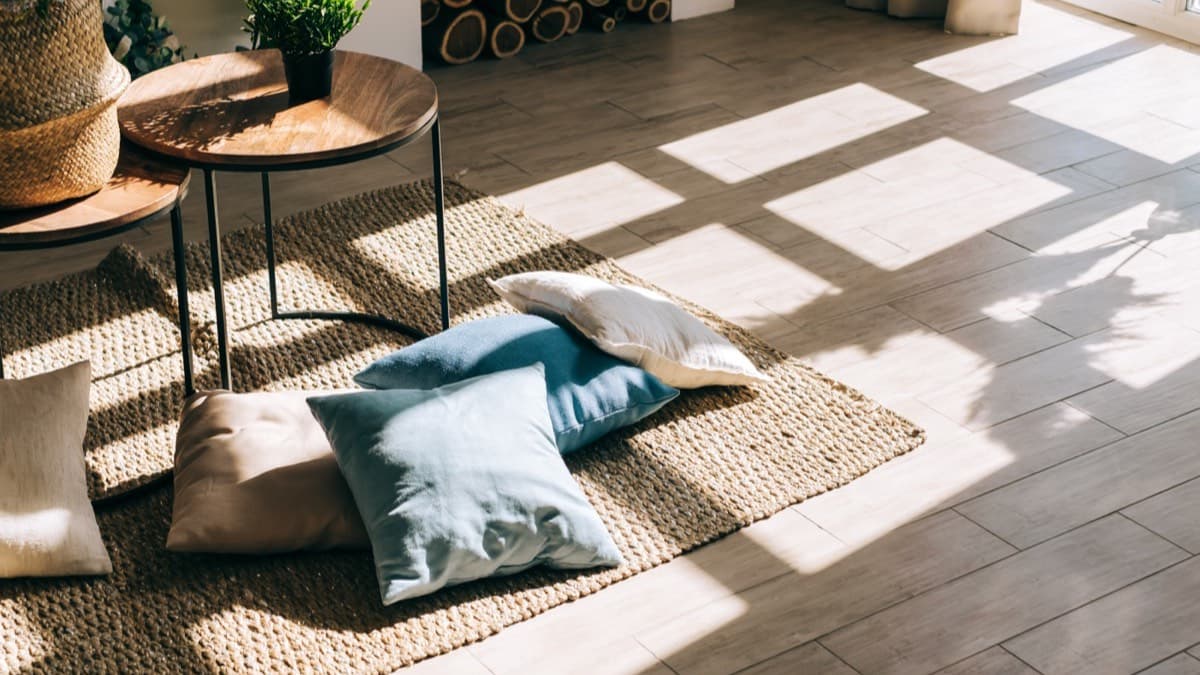
Keep rugs and furniture from blocking the sun on a tile or stone floor in winter, and keep all the glass clean. Close the shades on the south windows in summer.
Make the most of the sun in the house
- Clear the rugs off the sunlit tile or stone floor
- Clean the south-facing windows before winter
- Close the shades on the south windows in summer
FAQ
What is passive solar design?
A way of using a house's orientation, layout and materials to collect the sun's heat through south-facing glass, store it in heavy materials, and shade that glass in summer.
Which way should passive solar windows face?
Within 30 degrees of true south, unshaded from 9 a.m. to 3 p.m. in winter.
Can I add passive solar to an existing house?
An existing house can be adapted. Keeping the glass clean and the sun on tile or stone floors unblocked helps, and a major remodel is a chance to work with an architect who knows passive solar design.
Sources
Checked October 20, 2026
- U.S. Department of Energy. Guide to passive solar home design (2010)
- U.S. Department of Energy, Energy Saver. Energy Saver guide: tips on saving money and energy at home (2022)
- Owner
- Windows and doors