How-to
Working out what an appliance costs to run
Multiply an appliance's wattage by the hours it runs to get kilowatt-hours, then by your electricity rate to get what it costs you in a year.
Satisfy+ Editorial · Published July 27, 2026 · 3 min read · 20 min to do
At a glance
- Daily kWh
- Wattage × hours a day ÷ 1,000
- Yearly kWh
- Daily kWh × days used a year
- Yearly cost
- Yearly kWh × your rate per kWh
- A 40-watt bulb
- 5 hours uses 0.2 kWh
Knowing what each appliance and gadget uses shows you where the electricity money goes.
Power is measured in watts, and 1,000 watts is a kilowatt. What you pay for is energy used over time, measured in kilowatt-hours: one kilowatt used for one hour. Your electric bill charges a rate for each kilowatt-hour, so an appliance's wattage and the hours it runs give you what it costs.
What you need
- The appliance's wattage
- A rough idea of how many hours a day it runs
- Your electricity bill, for the rate per kilowatt-hour
Steps
- 1
Find the wattage
Look on the bottom or back of the appliance for its label. The owner's manual or the maker's website may list it too.
5 min
- 2
Estimate the hours a day
Use what you know, such as 4 hours of television an evening, or keep a log for a few days.
5 min
- 3
Work out the daily kilowatt-hours
Multiply the wattage by the hours a day, then divide by 1,000.
3 min
- 4
Work out the yearly kilowatt-hours
Multiply the daily figure by the number of days a year the appliance is used.
2 min
- 5
Work out the yearly cost
Multiply the yearly kilowatt-hours by the rate per kilowatt-hour on your electricity bill.
5 min
Work out what the appliances cost to run
- Note the wattage on each appliance's label or nameplate
- Check the electricity rate per kilowatt-hour on the bill
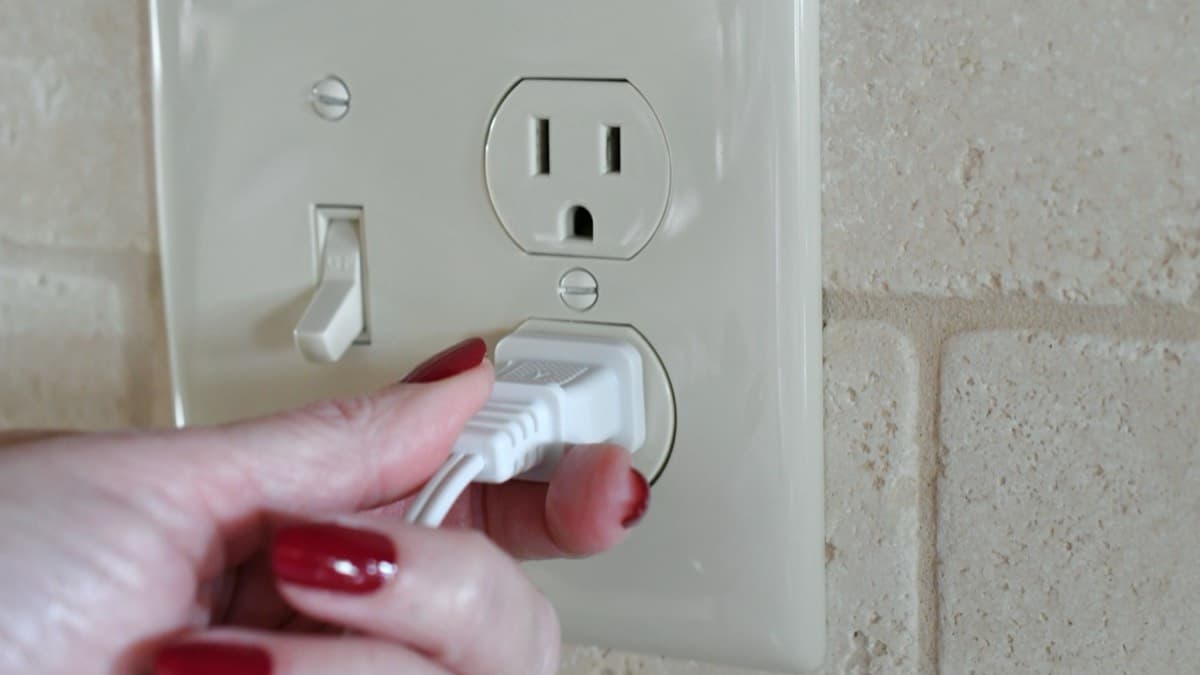
- Unplug the electronics that draw power when they're off
A worked example
An electric kettle labeled 1,500 watts runs about an hour a day in total, almost every day.
- Daily: 1,500 × 1 ÷ 1,000 = 1.5 kWh
- Yearly: 1.5 × 365 = 547.5 kWh
- Cost at 11 cents per kWh: 547.5 × $0.11 = about $60 a year
A 40-watt light bulb left on for five hours uses 200 watt-hours, or 0.2 kWh. At the same rate, that's about 2 cents.
The EnergyGuide label
The yellow EnergyGuide label on many home appliances shows the model's yearly energy use and running cost. It also shows how that compares with similar models. The appliances that carry one include refrigerators, freezers, dishwashers, clothes washers, water heaters, furnaces, heat pumps, air conditioners, ceiling fans and televisions. If you can't see it, look inside the appliance, or check the seller's or the maker's website.
The operating cost on the label is an estimate, based on typical use and a national average price for energy. What you pay depends on how you use the appliance and on your local rate, which is why your own numbers are worth working out.
Two price tags
An appliance has two costs: the price you pay for it, and the electricity it uses over its life. You'll pay for that electricity every month for 10 to 20 years, depending on the appliance. A model that costs more to buy but uses less can save money on your bills over time, and the yearly figures make the comparison.
Your meter
Your utility's meter, usually outside where the power line meets the house, measures what the whole home uses. Many utilities now use smart meters, which send usage data in real time, and some can track the use of a single device. Check whether your utility shows that data online.
Power drawn while it's off
Many electronics keep drawing power when they're switched off, which can add 5% to 10% to a monthly utility bill. An advanced power strip, with a timer, an activity monitor or a remote, stops that draw when the devices aren't in use. Unplug battery chargers once the batteries are full or when nothing is charging.
FAQ
How do I calculate what an appliance costs to run?
Multiply its wattage by the hours it runs a day and divide by 1,000 for kilowatt-hours. Multiply by the days a year it's used, then by your rate per kilowatt-hour.
What is a kilowatt-hour?
One kilowatt, or 1,000 watts, used for one hour. Your electric bill charges a rate for each one.
Is the cost on the EnergyGuide label what I'll pay?
No. It's an estimate based on typical use and a national average price. Your cost depends on how you use the appliance and your local rate.
Sources
Checked October 20, 2026
- U.S. Energy Information Administration. Electricity explained: measuring electricity (2026)
- Federal Trade Commission. How to use the EnergyGuide label to shop for home appliances (2022)
- U.S. Department of Energy, Energy Saver. Energy Saver guide: tips on saving money and energy at home (2022)
- Owner
- Beginner
- Tenant
- Budget
- DIY