How-to
Caring for silver and copper heirlooms
Check an heirloom for coatings and damage first, try denatured alcohol before any polish, and finish with a thin coat of microcrystalline wax.
Satisfy+ Editorial · Published June 29, 2026 · 3 min read · 1.5 hr to do
At a glance
- First
- Look for cracks, repairs, gilding and old coatings
- Before polishing
- Try denatured alcohol on a small area
- Polish
- Precipitated calcium carbonate and denatured alcohol
- Protect
- A thin coat of microcrystalline wax, buffed
Cleaning and polishing can damage a piece of silver or a copper alloy object when it's done the wrong way, so clean gently and only as needed. Skip commercial polishes. Many contain ammonia or harsh abrasives that can permanently damage a delicate surface. For a valuable piece, ask a conservator first.
Look before you clean
- The structure. Look for cracks, weak spots, old repairs and loose or missing parts. Cleaning means a lot of handling, so a piece has to be sound first.
- A clear coating. Some copper alloy pieces were given a clear coat such as shellac at the factory, to slow tarnish and give a gold-like look. Removing it lowers the piece's value for good.
- Patina. A thin, stable layer of brown, gray or black on the surface was often made on purpose as part of the finish.
- Gilding. A thin layer of gold can be destroyed by polishing.
Go ahead only with a sound piece, no original coating and just light dirt or tarnish.
What you need
- Nitrile gloves that aren't processed with chlorine, which tarnishes silver
- A padded table covered with soft cotton flannel or muslin
- A soft brush and a vacuum, for dust
- Mineral spirits, denatured alcohol and cotton swabs
- Precipitated calcium carbonate, which conservation suppliers sell
- Microcrystalline paste wax and an old silk scarf or clean nylon stocking
Steps
- 1
Set up a safe workspace
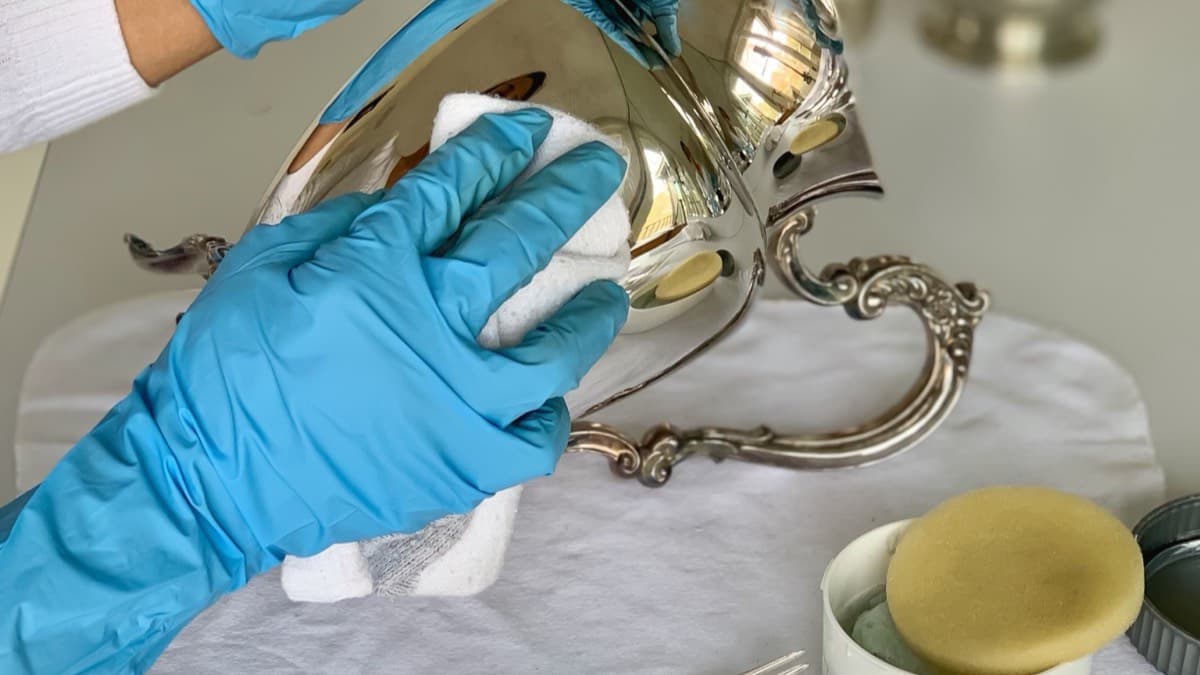
Work at a padded table in good light, with a window open for the solvent fumes. Wear the gloves, and cover any wood or ivory handles with thin plastic sheeting.
10 min
- 2
Brush off the dust
Sweep loose dust toward the vacuum nozzle with a soft brush, keeping the piece padded and supported so it can't fall. Skip dust cloths, which can drag grit across the surface.
10 min
- 3
Remove wax and old polish
Wipe waxy or oily buildup with cotton moistened with mineral spirits. Let a few drops sit on old polish residue for a few minutes, then lift it with swabs, rolling them rather than rubbing and changing them often.
15 min
- 4
Try denatured alcohol first
Wipe a small area with cotton moistened with denatured alcohol. Light tarnish sometimes comes off this way, and the piece may not need polishing at all.
10 min
- 5
Polish only if you need to
Mix a little precipitated calcium carbonate with denatured alcohol to the thickness of cream. Rub it on gently in circles with flannel or cotton, changing it often. Don't use ground chalk or whiting, which scratch. Leaving some darker tarnish in the recesses helps the design stand out.
25 min
- 6
Rinse and dry
Wipe off the residue with cotton dipped in clean denatured alcohol, then dry the piece with clean flannel. Keep liquid out of hollow handles and other spots that are hard to dry.
10 min
- 7
Wax and buff
Rub a small amount of microcrystalline paste wax over the whole surface with a soft cloth or brush. Wait a minute or two, then buff it with old silk or a clean nylon stocking.
10 min
Clean and protect the silver
- Check the silver for tarnish under its wax
Never do these
- Soak the piece in water.
- Wet a rim that may have iron inside it to strengthen it.
- Use too much calcium carbonate. A very little polishes a whole piece.
Keeping it bright
The wax protects the metal from water and air pollution for at least a year or two, depending on the air and how often the piece is handled. Dust it now and then with a soft natural-bristle brush and look for tarnish. When tarnish shows, take the old wax off with mineral spirits and wax it again.
Denatured alcohol and mineral spirits are flammable, and their fumes are harmful if you don't use them as the container directs. Know where the nearest fire extinguisher is before you start.
FAQ
Should I use silver polish on an heirloom?
Many commercial polishes contain ammonia or harsh abrasives that can permanently damage a delicate surface. A gentle mix of precipitated calcium carbonate and denatured alcohol is safer.
How do I keep silver from tarnishing?
Protect it with a thin coat of microcrystalline paste wax, buffed out. It lasts at least a year or two.
Can I wash silver in water?
Don't soak it, and keep water out of hollow handles and rims that may have iron inside.
Sources
Checked October 20, 2026
- National Park Service. Conserve O Gram 10/2: caring for silver and copper alloy objects (1999)
- Intermediate
- Owner
- Tenant
- DIY