How-to
Caring for wood furniture
Dust wood furniture with a soft brush or an untreated cloth, clean it only when dusting no longer helps, and protect a sound finish with thin coats of paste wax.
Satisfy+ Editorial · Published May 25, 2026 · 3 min read · 2 hr to do
At a glance
- Dust
- A vacuum brush or an untreated microfiber cloth
- Skip
- Feather dusters and silicone sprays
- Clean
- Only when dusting and buffing no longer help
- Wax
- Paste wax, thin coats, buffed after 30 to 60 minutes
Dust can damage a wood finish. Hard, sharp particles scratch it, and others can damage it chemically. Yet every way of removing dust carries some risk to a surface, so the first job is keeping dust from building up. Clean a piece beyond dusting only when it needs it.
Start by checking the finish. A finish that's flaking, cracking or lifting at the edges, or wood with splinters or loose veneer, shouldn't be dusted or cleaned at all. Have a furniture conservator look at a piece in that condition, or one you think has its original finish.
What you need
- A vacuum with a clean, soft brush attachment, and a soft artist's brush for carving
- Untreated microfiber cloths and clean cotton cloths
- Mineral spirits and a cotton swab, for testing and cleaning a finish
- A mild soap such as soap flakes, for stubborn dirt
- A silicone-free paste wax
Steps
- 1
Dust it
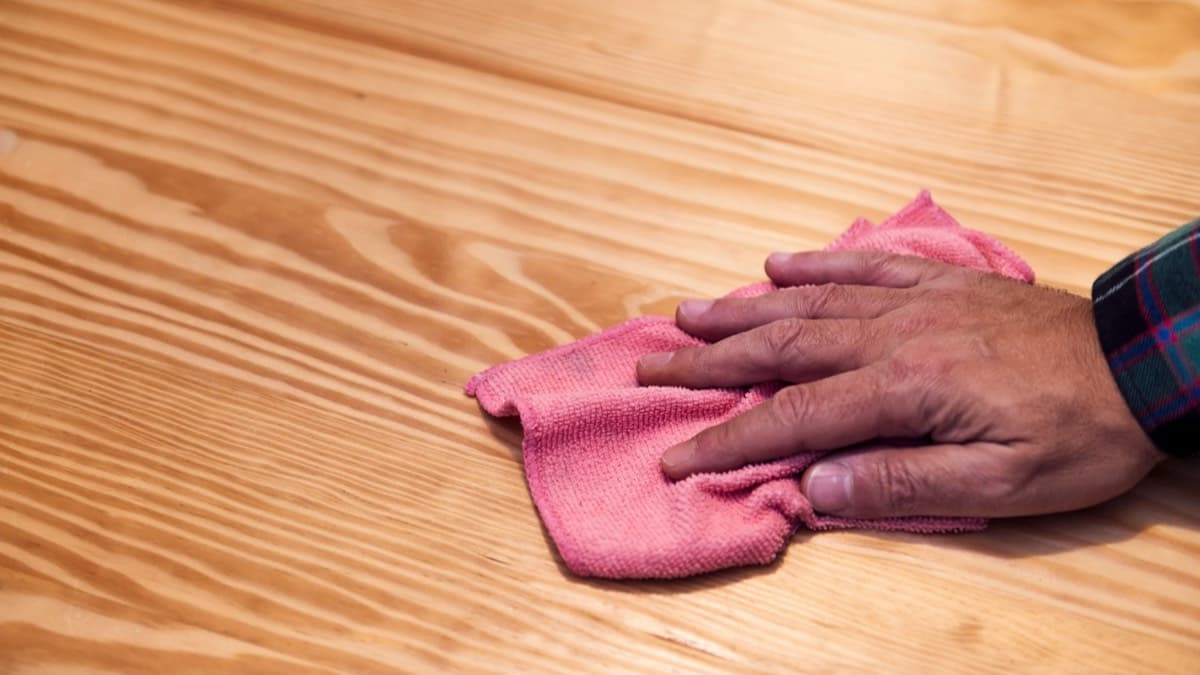
Run the vacuum's brush attachment gently along the grain, with the suction turned down. On carving or gilding, hold the nozzle just above the surface and sweep dust toward it with a soft brush no wider than the nozzle. With a cloth, wipe along the grain and turn the cloth often so a clean side touches the wood.
15 min
- 2
Test the finish before cleaning
If the finish still looks dull or dirty after dusting and buffing, dab mineral spirits on a small hidden spot with a cotton swab. If the finish softens, don't clean the piece. Ask a furniture conservator.
10 min
- 3
Clean with mineral spirits
Wipe the surface with a cotton cloth dampened with mineral spirits, using a soft brush dipped in it around carving. Wipe with a clean cloth and let it dry for several hours. Open the windows while you work, and follow the safety directions on the container.
20 min
- 4
Wash off stubborn dirt
If dirt remains, wipe lightly with a cloth dampened in warm water and a little mild soap and wrung out well. Wipe again with a cloth barely dampened in clear water, then dry it completely. On veneer or inlay, use very little water and do one small area at a time.
20 min
- 5
Wax it
Cleaning removes the old wax, so rewax once the wood is completely dry. Test the wax on a hidden spot first. Rub in a little with a cotton cloth, in circles and then along the grain, or with a soft toothbrush on carving.
30 min
- 6
Buff it
After 30 to 60 minutes, buff the wax out with a clean cotton cloth, or a soft shoe brush on carving. Two thin coats are better than one thick one, which turns sticky and holds dust.
25 min
Look after the wood furniture
- Clean the dust off the wood furniture with a soft brush
- Check whether the furniture's wax still buffs to a sheen
What to leave out
- Feather dusters. They scatter dust into the air, and broken feathers scratch.
- Treated dust cloths and spray or liquid polishes. They often contain silicones or oils that can harm a finish.
- Detergents. They leave a film that's hard to remove and can damage some finishes for good.
- Wax on bare wood. It soaks into the pores and is nearly impossible to get out.
- Water on unfinished wood. It can raise the grain. Dust unfinished wood with a dry cloth or the vacuum brush instead, since wiping can push dirt into the pores.
- Cleaning painted furniture. Some paints are fragile or wash off. Dust painted pieces only.
How often to wax
A paste wax protects a finish from dust, handling and spills. In a furnished room, furniture usually needs rewaxing every one to four years. As long as the existing wax still buffs to a sheen, it doesn't need more. A light wax can leave whitish specks in the pores of a dark wood, so use a darker, pigmented wax on walnut or mahogany and a natural one on maple or pine.
If wax turns cloudy or white in heat or humidity, mineral spirits will take it off.
FAQ
What's the best way to dust wood furniture?
A vacuum with a soft brush attachment, or an untreated microfiber cloth wiped along the grain. Skip feather dusters and treated cloths.
Should I use furniture polish spray?
Spray and liquid polishes often contain silicones that can harm a finish. A silicone-free paste wax is the safer choice.
How often should wood furniture be waxed?
Usually every one to four years. If the existing wax still buffs to a sheen, it doesn't need more.
Sources
Checked October 20, 2026
- National Park Service. Conserve O Gram 7/5: dusting wood objects (2002)
- National Park Service. Conserve O Gram 7/1: cleaning wood furniture (1993)
- National Park Service. Conserve O Gram 7/2: waxing furniture and wooden objects (2025)
- Owner
- Beginner
- Tenant
- DIY