Explainer
Irrigation controllers that water by the weather
Learn how weather-based and soil moisture controllers decide when a sprinkler system runs, and how much water they save over a clock timer.
Satisfy+ Editorial · Published May 22, 2026 · 3 min read
At a glance
- Clock timer
- Waters on a fixed schedule
- Weather-based
- Adjusts to local weather and the yard
- Soil moisture
- Skips watering when the soil is wet
- Savings
- Thousands of gallons a year
Most in-ground sprinkler systems, more than 28 million across the United States, run on a clock-based controller. Its schedule is often set for the height of the growing season and left there as the weather and the plants' needs change. Homes with clock-timer systems use about 50 percent more water outdoors than homes without irrigation systems.
Two kinds of smart controllers
WaterSense labels two kinds of controllers that set the watering by what the plants need.
- Weather-based controllers use local weather data and the yard's conditions to decide how much, how often and when to water.
- Soil moisture controllers, also called soil moisture sensors, measure the moisture in the ground and skip a scheduled watering when the plants don't need it.
Either kind can be a stand-alone controller or an add-on that works with an existing clock controller. Some controllers use both kinds of data, and those have to be certified for both to carry the label.
What they save
| Change | Average savings per home |
|---|---|
| Clock controller to a weather-based controller | Nearly 7,600 gallons a year |
| Adding a soil moisture controller | More than 15,000 gallons a year |
A labeled controller is independently certified to meet the plants' watering needs without overwatering. The savings depend on proper installation, programming and maintenance.
What still needs a person
A smart controller can't fix the hardware. A broken head, a leaking joint or a sprinkler aimed at the driveway wastes water under any schedule. Leaks and broken heads can waste up to 25,000 gallons and $280 over a six-month watering season.
- Inspect each zone monthly. Run each zone and look for heads that don't pop up fully, tilted or clogged heads, and leaks.
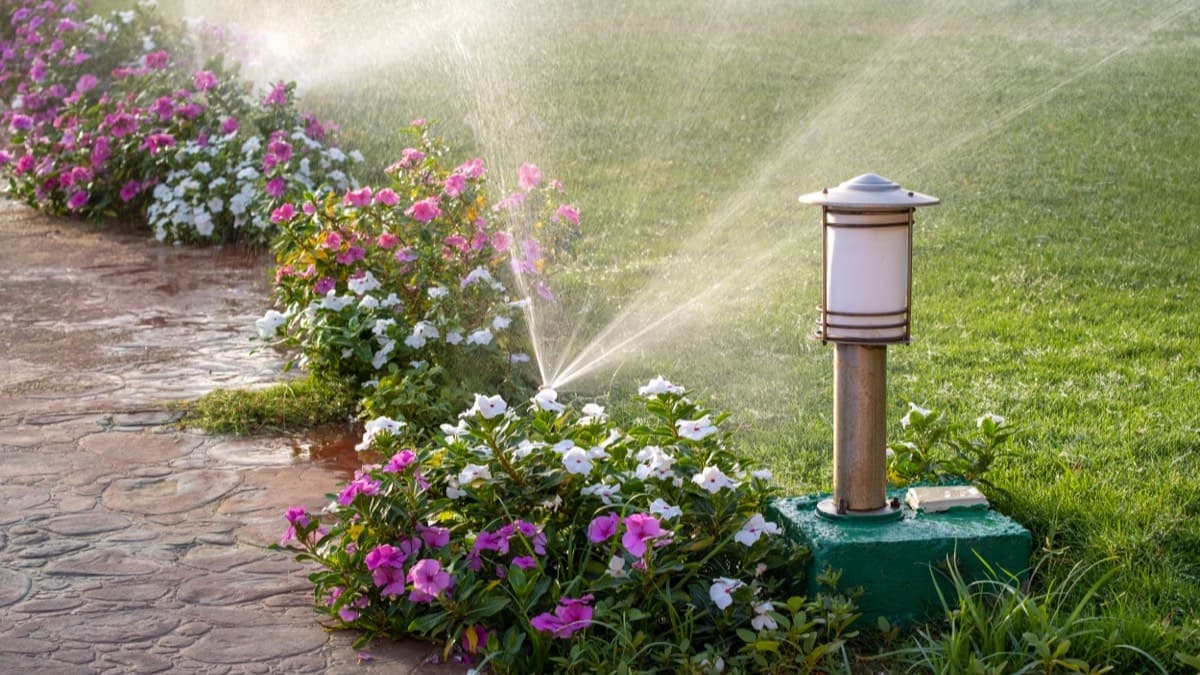
- Aim the heads. Turn any sprinkler spraying a driveway, sidewalk or wall back toward the yard. Each head should reach the one next to it.
- Watch for pooling. Water pooling between cycles can mean an underground leak. Where water runs off clay soil or a slope, split each run into shorter cycles with breaks so it soaks in.
Starting up and winterizing a sprinkler system covers the start of the season, and Watering the lawn covers how much grass needs.
An annotated example
What to do next
Write down the make and model of the sprinkler controller and what each zone waters. Then run each zone and look for leaks and broken heads.
Check the sprinkler controller and zones
- Note the make and model of the sprinkler controller
- List each zone and what it waters
- Check each sprinkler zone for leaks and broken heads
FAQ
What is a weather-based irrigation controller?
A sprinkler controller that uses local weather data and the yard's conditions to set how much, how often and when to water.
How much water does a smart irrigation controller save?
On average, nearly 7,600 gallons a year for a weather-based controller in place of a clock timer, and more than 15,000 gallons a year for a soil moisture controller.
Can I add one to my existing controller?
Yes. Both kinds come as add-on devices that work with an existing clock controller.
Sources
Checked October 20, 2026
- U.S. Environmental Protection Agency, WaterSense. Irrigation controllers (2026)
- U.S. Environmental Protection Agency, WaterSense. Weather-based irrigation controllers (2026)
- U.S. Environmental Protection Agency, WaterSense. Soil moisture-based irrigation controllers (2026)
- U.S. Environmental Protection Agency, WaterSense. Watering tips (2026)
- U.S. Environmental Protection Agency, WaterSense. Sprinkler spruce-up (2026)
- Yard
- Owner
- Plumbing
- Spring