How-to
Japanese beetles on plants
Knock Japanese beetles into soapy water in the cool of the morning or evening from late June, keep at it for six to eight weeks, and skip the traps.
Satisfy+ Editorial · Published June 3, 2026 · 3 min read · 15 min to do
At a glance
- When
- Late June through August
- What to look for
- Lacy, skeletonized leaves
- Best removal
- Knock them into soapy water, morning or evening
- Skip
- Japanese beetle traps
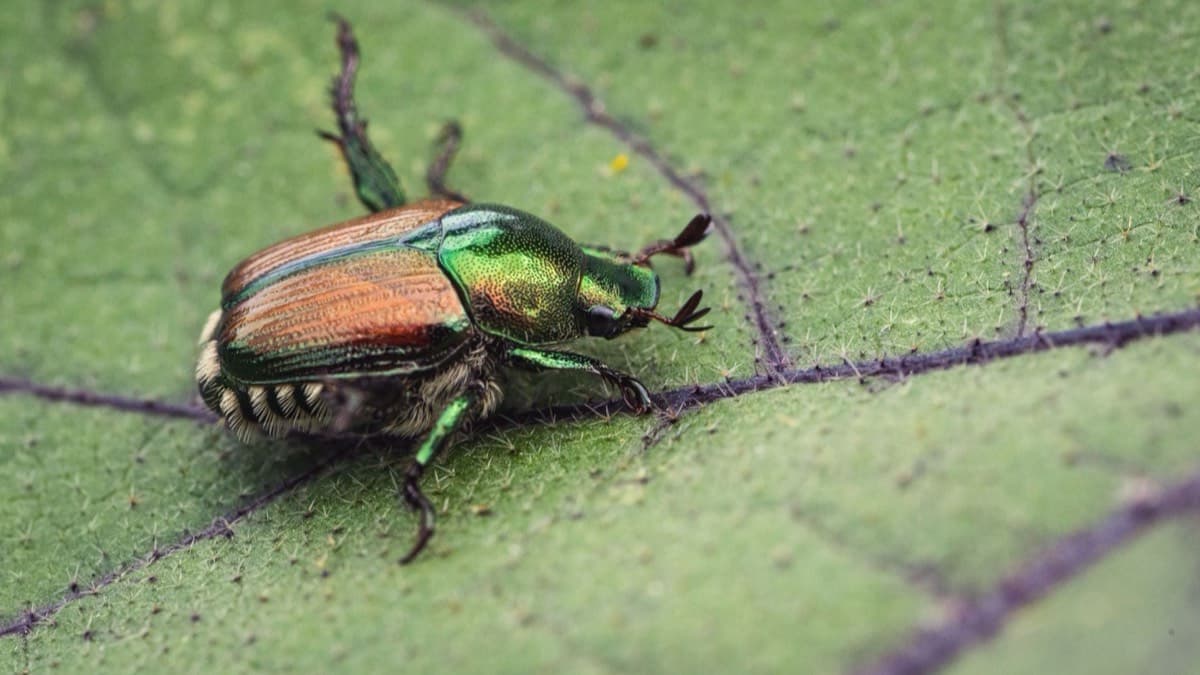
Japanese beetles feed on the leaves, flowers and fruit of more than 300 kinds of plants. Favorites include roses, grapes, linden, apple, crabapple, cherry, plum, birch, raspberry, basil, hollyhock and marigold. The adults are about 1/3 to 1/2 inch long, with a metallic green head and copper-brown wing covers, and five white tufts of hair along each side.
They chew the tissue between a leaf's veins and leave a lacy skeleton behind. A damaged leaf gives off a scent that draws more beetles. That's why they cluster on one plant and leave the one next to it nearly alone. On most plants the damage is only cosmetic. Healthy, established trees and shrubs can take a lot of feeding, though young or weak plants can be stunted or killed, and rose blossoms are often ruined.
What you need
- A bucket of water with a squirt of dish soap
- Fine netting, for plants that aren't flowering
Steps
- 1
Start looking in late June
Adults come out of the ground in late June or early July and feed mainly through July and August. Start as soon as you see the first ones, since fewer beetles on a plant means fewer drawn to it.
5 min
- 2
Go out when it's cool
Early morning and evening are best, when the beetles are cool and sluggish. Any time still helps.
1 min
- 3
Knock them into soapy water
Hold the bucket under the beetles and tap or handpick them into it. Check the plants daily and remove any you find.
10 min
- 4
Net plants that have finished flowering
Fine netting can protect a plant from beetles. Don't cover a plant in bloom that needs pollinating, such as a fruit plant. Handpick until it has finished blooming and started to set fruit, then net it.
10 min
- 5
Keep going for six to eight weeks
The beetles feed for six to eight weeks, so keep at it until their numbers fall.
1 min
Keep Japanese beetles off the plants
- Check the roses and fruit plants for Japanese beetles
- Set a bucket of soapy water by the garden for beetles
Skip the traps
Japanese beetle traps lure beetles with a synthetic pheromone and a floral odor, and they can catch a great many beetles. Research has shown that more beetles fly toward a trap than end up in it. A trap in a home garden usually means more damage to nearby plants, not less. They were developed to monitor where beetles are, not to protect plants.
Leave the ones with white eggs
In Minnesota, a small fly that lays white eggs on Japanese beetles has been released as a natural enemy, and it's likely helping keep beetle numbers down. Leave alone any beetle with one or more white dots on its back. A single egg is enough for the fly to parasitize it.
Grubs in the lawn
The beetles' grubs live in the soil and feed on grass roots, and a lot of them can leave dead patches that roll back like carpet. Grubs in the lawn, checking before you treat covers how to count them.
If handpicking isn't enough
An insecticide can protect a valued plant, but it can also harm bees, birds, fish and other wildlife. A professional pesticide applicator is a good option, especially for trees.
FAQ
What's the best way to get rid of Japanese beetles?
Knock them into a bucket of soapy water, early in the morning or in the evening, and check the plants every day while they're feeding.
Do Japanese beetle traps work?
Not for protecting a garden. More beetles fly toward a trap than are caught, so plants nearby usually take more damage.
Will Japanese beetles kill my plants?
Usually not. The damage is mostly cosmetic, though young or weak plants can be badly hurt.
Sources
Checked October 20, 2026
- University of Minnesota Extension. Japanese beetles in yards and gardens (2025)
- Yard
- Owner
- Pests
- Summer
- Beginner
- Free
- DIY