Guide
Native plants and a water-wise yard
Native plants need little water once established, and grouping plants by need, mulching and a smaller lawn cut the watering further.
Satisfy+ Editorial · Published August 17, 2026 · 4 min read
At a glance
- Native and low-water plants
- Little water beyond rainfall once established
- Hydrozones
- Group plants by how much water they need
- Mulch
- 3 to 4 inches, a few inches back from trunks
- Lawn
- Only where it gets used, mowed at the tall end of its range
Homes across the United States use nearly 8 billion gallons of water a day outdoors, mostly to water landscapes. The average household uses more water outside than for showering and washing clothes combined.
Why native plants
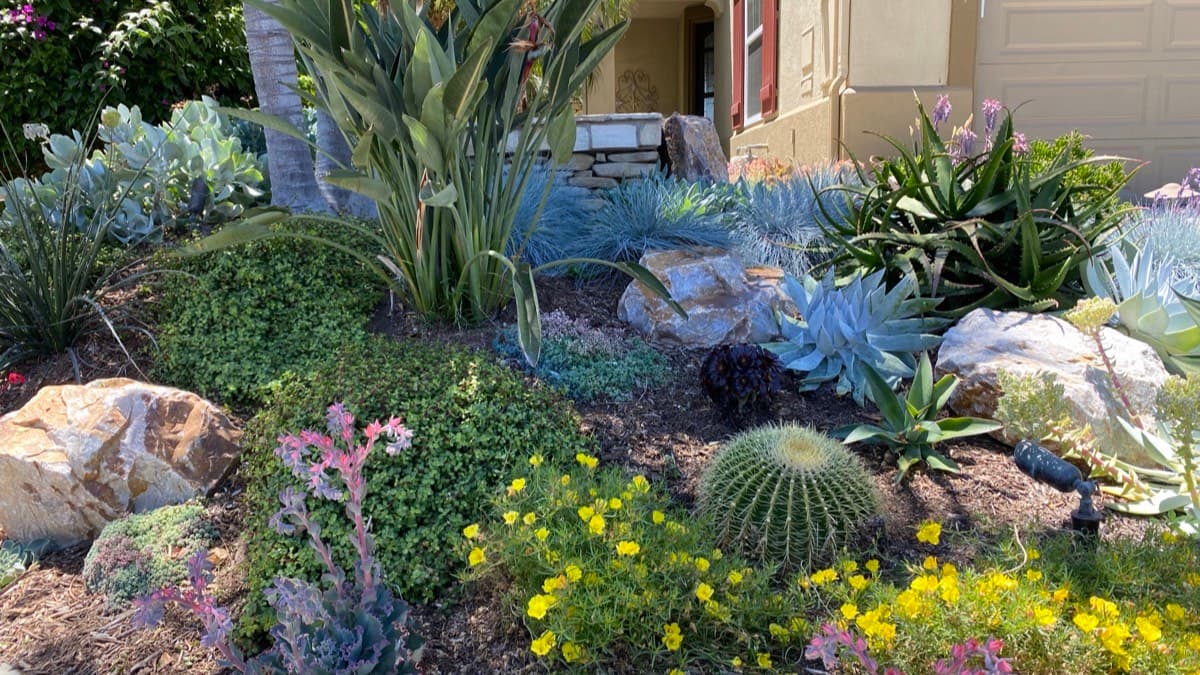
Plants native to your region, and other low-water plants suited to it, need little water beyond normal rainfall once they're established. They're adapted to the local soil and climate, so they rarely need fertilizer and resist pests and diseases better than most other plants. Some exotic plants turn invasive, can need more water, and crowd out native ones.
Extension services, native plant societies and botanical gardens publish lists of low-water and drought-tolerant plants for each state. Start with the list for your state and your USDA plant hardiness zone.
Plan the yard around how you use it
Decide what each part of the yard is for. A lawn is a good place for kids and pets to play, but it needs upkeep more often. Shade trees keep the yard cooler, and a shrub border frames the front of the house. A rain garden holds runoff in the yard instead of sending it down the street.
Parts of the same lot can differ a lot in soil, sun and wind. A shade plant set in full sun won't thrive, so match each plant to its exact spot.
Group plants by water need
Plants with the same watering needs go together in one zone, called a hydrozone. Each zone can then be watered to its own needs, so its plants get neither too much water nor too little. Lawn and shrubs belong in separate zones.
New trees and shrubs need regular watering until their roots take hold, then less or none. A low ring of soil around a new plant, called a berm, keeps the water at its base.
Slopes and new lawn
A steep slope sheds water and erodes. Where one can't be avoided, plant it with deep-rooted native ground covers and shrubs to hold the soil.
New lawn can go in as sod, plugs or sprigs, which are grown plants and take hold quickly, or as seed. Sod costs more to install. Seed costs less and takes longer to establish, which means more watering in the meantime.
Build up the soil
Healthy soil holds water, cycles nutrients and cuts runoff. A soil test shows the nutrients, pH, texture and organic matter, and your local Cooperative Extension office can run one. Very sandy soil, heavy clay, compacted ground or an extreme pH limits what will grow. In those cases, ask a nursery or the extension office before you plant. Ground compacted by construction or foot traffic soaks in more water after aeration.
Mulch the beds
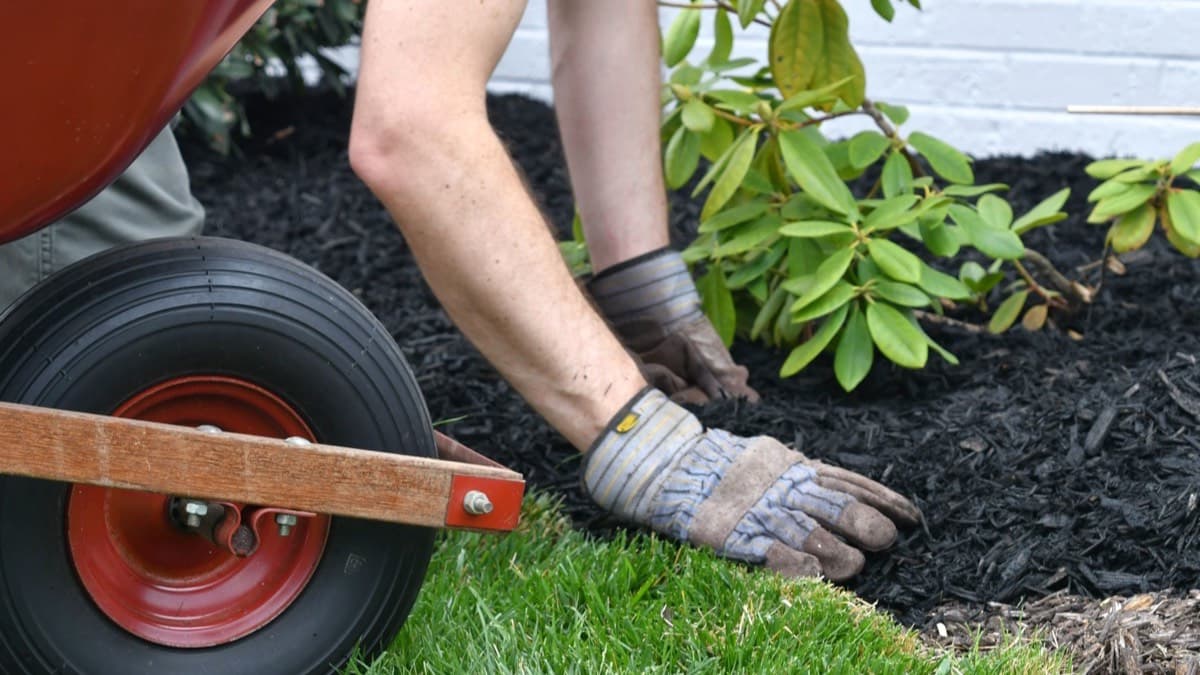
Mulch slows evaporation, so the soil stays moist longer and needs watering less often. It also holds down weeds, stops erosion and evens out soil temperature.
- Spread it 3 to 4 inches deep for most plants. Deeper mulch can keep water from reaching the roots.
- Leave a few inches of space between organic mulch and the base of trees and other woody plants, to prevent rot.
- Keep rock mulch out of sunny spots and away from plants that aren't from dry climates. It radiates heat and can scorch them.
- Pull the weeds before you mulch, and spread it evenly so there are no thin spots.
Next to the house, a thinner layer kept back from the wall is better for the foundation. Mulch and beds along the foundation covers that strip.
Keep the lawn where it's used
Put turfgrass where it has a job, such as a play area, and choose a low-water grass suited to your climate. Mow at the tallest height in the recommended range for your grass. Longer blades shade each other and the soil, grow deeper roots and hold up better in a drought. Raise the blade in summer especially, since cutting short spurs thirsty new growth.
Fertilizer also spurs thirsty growth, so use as little as the plants need. When you do fertilize, a slow-release or natural organic product feeds evenly and runs off less. Grass clippings left on the lawn feed it too.
An annotated example
What to do next
Look up the low-water plant list for your state, then walk the yard and note the sun, shade and soil in each part of it. Get a soil test before you plant a new bed. When you change the plantings, put the lawn and the beds on separate watering zones. Watering the lawn covers how much grass needs, and a rain barrel catches roof water for the beds.
Make the yard water-wise
- Find the low-water plant list for your state
- Test the soil before you plant a new bed
- Check the mulch in the beds is 3 to 4 inches deep
- Raise the mower blade for the summer
FAQ
Do native plants need watering?
While they're getting established, yes. After that, native and low-water plants suited to your region need little water beyond normal rainfall.
How deep should mulch be?
3 to 4 inches for most plants, with a few inches of space at the base of trees and shrubs.
What is a hydrozone?
A group of plants with the same watering needs, watered on their own so none get too much or too little.
Sources
Checked October 19, 2026
- U.S. Environmental Protection Agency, WaterSense. WaterSense outdoors (2026)
- U.S. Environmental Protection Agency, WaterSense. Landscaping tips (2026)
- U.S. Environmental Protection Agency, WaterSense. What to plant (2026)
- Yard
- Owner
- Beginner
- DIY